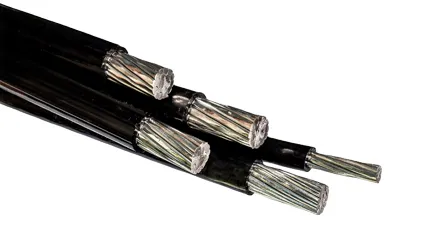
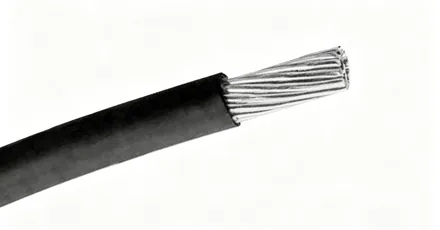
Aluminum alloy cables are primarily composed of aluminum, enhanced with elements such as copper, manganese, magnesium, titanium, chromium, zinc, and iron through advanced synthesis and annealing processes. These improvements address the limitations of pure aluminum cables.
Compared with copper cables, aluminum alloy cables have a resistivity about 1.68 times higher. However, when the cross-sectional area is increased, both can achieve similar current-carrying capacity and voltage drop. In terms of weight, copper’s density is approximately 8.9 t/m³, while aluminum alloy is about 2.7 t/m³—making copper over three times heavier.
When the cross-sectional area of aluminum alloy cables is about 1.5 times that of copper, their electrical performance is nearly equivalent, while weight remains about half. Therefore, choosing between the two depends on specific engineering needs and application requirements.